
Therapy for Adult Children of Narcissistic and Emotionally Immature Parents
Work with a psychologist who understands how your parents can feel like a looming presence yet entirely absent at the same time, and why you still leave every encounter feeling like you're the problem
Online therapy for difficult parent relationships in California, Texas, Virginia, and 40+ states | A Los Angeles-based psychology practice












Does This Sound Like You?
Despite doing everything you can to make your parents happy, it feels like you're never enough.
Somehow, one or both of your parents always find a way to be disappointed or angry with you, whether it's something small, like a comment about your haircut ten minutes into Thanksgiving, all the way to the really painful stuff, like a parent who can’t be happy for you on your wedding day because the day wasn't about them.

At work, you might be the one who runs the operating room, closes the deal, or walks into a deposition completely prepared and totally unflappable.
But one text from your mother can undo the whole afternoon, and a single phone call with your father can leave you feeling like you're twelve years old again, explaining yourself to someone who's already decided that you’re wrong.
It's strange to feel like your parents are at once a looming presence, yet also entirely absent and emotionally unavailable.
Growing up, and even now as an adult, you may have felt like you had to fend for yourself, because you could never truly rely on them.
Love from your parents feels conditional: it depends on what you do, not who you are, and it's something that has to be "earned," as opposed to something that's simply there unconditionally.
Here are some experiences that you might recognize:
You rehearse phone calls with your parents in your head (sometimes for days), and they still never go the way you planned.
You've accomplished things that most people would be proud of, but you’re still waiting for one particular person to finally say they’re proud of you.
You know in your heart that you love and appreciate your parents, but whenever you try to express it, something goes sideways.
Doing what they say they want doesn't help because there's always something more that you're not measuring up to.
You feel a wave of guilt for having any needs or negative feelings at all, and an even bigger one when those needs involve saying no to your parents.
After a visit home, it takes you a few days to feel like yourself again, and you're not totally sure why.
When there's conflict, your first impulse is to see yourself as the problem.
And if you don't satisfy their every demand, you have to deal with punishment, criticism, or rejection for not being good enough.
Blame.Angry outbursts.Guilt trips.Cold shoulders.Silent treatment.
Their constant dissatisfaction can be beyond hurtful and suffocating, and you might feel manipulated and trapped, as if any form of connection with your parents could be weaponized against you.
Underneath all of it, there's often an implicit belief: if you could just get it right this time—the right career, the right partner, the right tone of voice—they'd finally see you.
Most of our clients have been trying to get it right for decades. They know deep down that it’ll never be possible, but some part of them still keeps holding out hope that next time will be different, even though it never is.
What Is Therapy for Dealing with Narcissistic and Emotionally Immature Parents?
Therapy for adult children of narcissistic or emotionally immature parents is individual therapy for grown children whose relationship with one or both parents has left them with chronic guilt, self-doubt, or a sense that love has to be earned.
It's just for you and about your experience; your parents aren’t involved, and they don't need to be apprised about anything that happens in your therapy.
These relationships go by many names online: difficult parents, toxic parents, narcissistic parents, emotionally immature parents.
We tend to use more specific language as opposed to sweeping labels, partly because "toxic" doesn't say much about what actually happened, and partly because many of our clients still love their parents and feel hesitant about seeing them as full-on villains.
To be clear too, we’re also not going to diagnose your parents. We've never met them, and a diagnosis isn't what helps. What helps is processing what it was like to grow up with them, what you had to become to get by with them, and why those old strategies are still running through your life now.
At Helm Psychology, this depth work happens in psychodynamic therapy with clinical psychologists.
We’re not going to hand you a script for the next holiday dinner, and we're not going to tell you to cut your parents off (or to keep them close). Instead, we help you get clear enough on your own feelings and history that those decisions become yours to make.
Therapy for Adult Children of Narcissistic Parents
When a parent has strong narcissistic traits, the relationship tends to organize itself around the parent’s needs: their moods, their image, their version of events.
As a child, you learn to become whatever they need you to be in that moment—the audience, the trophy, the golden child, or the scapegoat—and it can take many years before you even realize that certain parts of your sense of self didn’t get to fully develop.
Signs of a Narcissistic Parent
Narcissistic traits in parents can look loud and obvious, or they can be subtle and much harder to spot. Some of the patterns that our clients describe include:
Everything eventually comes back to being about them, including your good news, your bad news, and your feelings about how they treated you.
They're easily offended. An innocent comment can set off days or even weeks of hurt, anger, or silence that somehow is always your fault.
Your achievements matter mostly for how they reflect on the family, and they're talked about to other people more than they're ever acknowledged directly to you.
They need you to remember their version of the past, and disagreeing with their version can feel like a betrayal.
One sibling is the "golden child" and another is the one who's always to blame, and those roles durably stick into adulthood.
Being around them is a Jekyll/Hyde situation. They seem deeply generous and charming in public, but behind closed doors, they can be someone else entirely.
That last pattern often describes what people call a covert narcissistic mother or father: a parent whose self-focus comes out as fragility, martyrdom, or guilt as opposed to grandiosity. And because nothing looks dramatic from the outside, adult children of covert narcissistic parents often doubt their own memories, and wonder whether they're just being ungrateful.
Co-Narcissism: How You Learned to Accommodate
In his 2005 paper, Co-Narcissism: How We Accommodate to Narcissistic Parents, the psychotherapist Dr. Alan Rappoport described what often happens to the children of narcissistic parents: they learn to take care of the parent's self-esteem by working hard to please others, deferring to other people's opinions, taking the blame for interpersonal problems, and losing track of their own views and feelings along the way.
He called this pattern "co-narcissism," in the same way that "co-dependent" describes the other side of dependency.

Rappoport's image for it is a stage: the narcissistic parent needs the spotlight, and the child learns to be the approving audience. You're rewarded when you play that role well, and when you don’t, you’re punished through criticism, guilt, or withdrawal.
For a lot of our clients, reading this description is the first time that their life has made sense to them. It explains why they're so attuned to everyone else's moods, why being called selfish lands like a punch to the gut, and why, in so many of their relationships, there doesn't seem to be much room for two people at once.
It also overlaps a great deal with people-pleasing, which is often where co-narcissism shows up most visibly.
Narcissistic Mothers and Narcissistic Fathers
Many of the adults who come to us are looking specifically for therapy for a narcissistic mother: the mother who competed with her daughter, who needed her son to be her confidant, or who made every milestone about her own feelings.
Others are dealing with a narcissistic father whose approval was the currency of the household, and whose rare praise was so precious that they've been chasing it ever since.
The dynamics can differ, and so can what tends to get passed on.
Daughters of narcissistic mothers can describe a lifelong habit of shrinking their own needs, while sons of narcissistic fathers can describe a drive to succeed that never quite feels like their own (and, of course, plenty of people recognize both).
Therapy for Adult Children of Emotionally Immature Parents
Not every difficult parent is narcissistic, and for many of our clients, "narcissist" may not necessarily feel quite right.
Their parents may not exactly have been cruel or controlling, but they were strangely unavailable: present for the logistics of childhood but absent for the feelings, uncomfortable with emotional conversations, and somehow more like a child than a parent whenever things got hard.
The clinical psychologist Dr. Lindsay Gibson describes this in her book Adult Children of Emotionally Immature Parents: How to Heal from Distant, Rejecting, or Self-Involved Parents. She outlines four types of emotionally immature parents:
The emotional parent, whose moods dominate the household and leave everyone else feeling unstable or anxious.
The driven parent, who stays busy trying to perfect everything and everyone, including you.
The passive parent, who avoids anything upsetting and leaves you to deal with it alone.
The rejecting parent, who's withdrawn, dismissive, or derogatory.

The driven parent, in particular, is very familiar to many high achievers.
You might've grown up with a parent who was involved in everything—your grades, your activities, your college applications—and yet never once asked how you were actually doing, much less feeling. From the outside it looked like devotion, so the loneliness of it can be very hard to name.
The common thread is emotional loneliness: the sense of being cared for in practical terms, but not really feeling known in a true way, and of having to manage your parents' feelings instead of having them help with yours.
Enmeshment and Parents Who Need You Too Much
Some parents don't withdraw; they hold on too tightly. In an enmeshed family, the line between your feelings and a parent's feelings gets blurry.
A parent might call you every day and take it personally when you don't answer, treat your decisions about your career or your partner as decisions about them, or rely on you as their main source of emotional support.
Enmeshment can look a lot like closeness, and sure, it can come with real love, but that’s exactly what makes it so hard to untangle.
In therapy, we help you figure out where your parent ends and you begin, so that you can stay connected to yourself without feeling like you're disappearing.
Parentification and Eldest Daughter Syndrome
Parentification is when a child ends up taking care of a parent's emotional or practical needs: being a parent's confidant through a divorce, raising younger siblings, translating at the bank for immigrant parents, or simply becoming the most responsible person in the house by age seven.
It's often discussed online as "eldest daughter syndrome," because the role so often falls to the oldest girl in the family, though sons, middle children, and only children get parentified too.
Many of our clients are still the family's designated fixer, the one who handles a sibling's crisis, a parent's medical decisions, and everyone's hurt feelings, often while running a demanding career. And it rarely occurs to them that this role was never one they chose, much less ever supposed to be theirs.
Other Difficult Parent Relationships We Work With
Plenty of difficult parent relationships don't fit neatly into any category, and you don't need a label for yours to take it seriously. We often work with adults who grew up with:
"Tiger" parents and helicopter parents, where love and achievement got tangled together so early that it's hard to know what you'd want if nobody was watching.
Immigrant parents, whose sacrifices were real and enormous, and whose expectations can make your own needs feel ungrateful. Sometimes this also includes generational trauma: war, displacement, poverty, or loss that your parents never talked about, but that shaped the whole family anyway.
Highly successful or wealthy parents, where it's hard to separate your own accomplishments from the family name, or where you're told that you've had every advantage and therefore have no right to complain.
Divorced parents, especially when you were put in the middle, asked to take sides, or simply expected to be the stable one.
A parent with addiction or mental illness, where the household revolved around their chaos and unpredictability.
Some of our clients describe their parents as toxic; others say their parents were good people who simply didn't have much to give. Both are welcome here, and so is not knowing yet.
Guilt, Boundaries, Low Contact, and Family Estrangement
The Guilt That Comes With Having Needs
For many adult children of narcissistic and emotionally immature parents, guilt is the main event. You feel guilty for being annoyed, guilty for not calling, guilty for having a life that's separate from theirs, and guilty, sometimes most of all, for even talking about them in therapy.
We take that guilt seriously, as opposed to trying to talk you out of it. It usually tells us something important about what you were taught that you owed your parents, and what happened when you didn't pay up.
Setting Boundaries With Parents as an Adult
You've probably already read plenty about setting boundaries with your parents. Maybe you've even tried, only to find that your carefully worded boundary was met with tears, anger, or a call from a sibling asking why you're upsetting Mom.
That's because the hard part of a boundary is rarely the words. It's tolerating your parent's reaction, and the flood of guilt and fear it sets off inside you.
In therapy, we work on the parts that a script simply can't reach: why their disappointment still feels so dangerous, and what you actually want the relationship to look and feel like.
Low Contact, No Contact, and Estrangement From Parents
Some of our clients are thinking about going low contact or no contact with a parent. Some already have, and are dealing with the grief, relief, and second-guessing that can follow. Others are trying to figure out how to stay in a relationship with a parent who isn't going to change.
We don't have an agenda about which of these is right for you, and we won't push you toward reconciliation or estrangement. Family estrangement therapy, as we approach it, means making space for the whole range of what you feel, including the love that often survives even when contact doesn't, so that whatever you decide to do is really coming from you and not from just guilt or exhaustion.
Questions about aging parents, caregiving, and what you'll feel when a parent gets sick or dies are part of this too.
How Difficult Parents Show Up in the Rest of Your Life
All of this is familiar from your parents, but these patterns and experiences might also show up in other parts of your life.
Friendships.Romance.Siblings.The workplace.Or even your kids.
You might find yourself drawn to partners who are hard to please, or to bosses whose approval feels strangely urgent. You might be the friend in whom everyone confides, all while nobody checks in on you.
You might notice your parent's voice coming out of your mouth with your own kids, and feel a jolt of terror that you're becoming exactly what you swore you never would.
None of this means something's wrong with you. The patterns we learn in our first relationships tend to become the template for the rest of them, and that's exactly what depth therapy is designed to work with.

In the Therapy Room
The same patterns usually show up with your therapist too.
You might worry that you're complaining too much, wonder whether we secretly think you're being unfair to your parents, or watch us carefully for the first signs of judgment or criticism.
Rappoport noticed this as well: for people who grew up with narcissistic parents, a big part of therapy is discovering that the therapist isn't going to need them to be anything other than who they are.
We'll gently notice those moments with you when they happen, because a therapy relationship where you can disagree, take up space, and not be punished for it is often a new and powerful experience in and of itself.
What We Work On in Therapy for Difficult Parents

Seeing Your Parents More Clearly
For many clients, an important early step is being able to look at their parents with clear eyes: not demonizing them wholesale, but also not excusing them either. Just seeing what was actually there. That often includes understanding your parents' own histories, which can bring some compassion, but without asking you to give up your own experience to make room for it.

Knowing What You Feel and Want
When you've spent years tracking a parent's moods, your own feelings can be hard to find. We work on slowly building that back by noticing the irritation, sadness, or longing that you've learned to override, and figuring out what you actually need and want (as opposed to simply what keeps the peace).

Grieving the Parent You Didn't Get
Sometimes the hardest part of this kind of therapy is letting go of—and truly grieving—the hope that your parent will finally become the parent you needed and wanted. That grief can be enormous, and it's also what tends to free up energy for the relationships you do have, including in some cases a more realistic relationship with your parents themselves.

Not Passing It On
Many of our clients come to us when they become parents themselves, or when they're thinking about it. Understanding your own history is one of the most meaningful ways to make sure that your kids grow up with something different, and to break the generational patterns that may have been in your family for longer than anyone remembers.
Are you a physician, therapist, or other colleague thinking about a referral? Here's an overview of who we see and how we work:
Who We HelpOur Psychodynamic Approach to Healing from Narcissistic and Emotionally Immature Parents
Helm Psychology is a depth-oriented psychodynamic therapy practice, which means we look at how your earliest relationships shaped the way you see yourself, other people, and what you can expect from them, instead of only coaching you on what to say at the next family gathering.
What a difficult parent leaves behind tends to show up in how you relate to people, and so the therapy relationship itself is one of the most useful tools we have. For many of our clients, it's the first relationship where they get to be fully seen by someone who doesn't need anything from them in return, and where disagreeing doesn't come with a price.

We'll also be upfront that this kind of therapy is long-term work. Patterns that were built over an entire childhood don't usually shift in just a handful of sessions. Many of our clients have already read the books, listened to the podcasts, and figured out their parents intellectually, and yet their stomach still drops when Mom's name lights up their phone.
Why Helm Psychology Is Especially Attuned to Difficult Parents in High Achievers
Nearly all of our clients are high-achieving professionals, and many of them are surprised by how often their success and their family history turn out to be connected. Achievement is a very common way to earn a narcissistic or emotionally immature parent's attention, and it works just well enough to become a lifelong strategy.
And the connection tends to take a different shape in each profession.
In medicine, it can be the parent who brags about "my son, the doctor" to everyone they know, but who's never asked what residency was actually like.
For executives, it's sometimes the realization that you've built an entire career around being the steady one in the room, which is the same role you played at home.
In finance, it can be a number that's never high enough, earned for a parent who measured worth in money and status.
For business founders, it's often the drive to build something that's entirely yours, finally out of reach of anyone's criticism, yet also in service of gaining your parent’s approval.
In law, it's the irony of being able to argue anyone's case brilliantly except your own, especially at your parents' dinner table.
And because we're clinical psychologists rather than coaches, if anxiety, depression, burnout, or perfectionism are part of what's happening, we can assess and work with those things too.
For more on how this plays out in your field:





Meet Your Therapists for Difficult Parent Relationships
Annia Raja, PhD
Dr. Annia Raja is a licensed clinical psychologist and the founder of Helm Psychology, practicing in California, Texas, Virginia, and 40+ states.
Before psychology, she worked in management consulting at BCG and in investment banking at Morgan Stanley. She is also married to a physician in a rigorous and demanding specialty.
Much of her work is with accomplished adults who are still, in some corner of themselves, waiting for a parent's approval, and she's especially attuned to how family expectations get woven into ambition, career choices, and what success is supposed to mean.

Chaim Rochester, PhD
Dr. Chaim Rochester holds a PhD in Clinical Psychology and is a psychologist handpicked by Dr. Annia Raja.
He came to psychology after a career in corporate consulting and executive coaching, and he works extensively with leaders, high performers, and creatives. He's particularly skilled at helping clients catch the moments when an old family role (the peacekeeper, the fixer, the one who never needs anything) is running a relationship at work or at home today.
He also sees clients in the early mornings and evenings, which for a practice like ours is a much-appreciated bonus for busy, high-achieving clients.

FAQs about Therapy for Dealing with Narcissistic and Emotionally Immature Parents
What are the signs of a narcissistic parent?
Common signs include a parent who makes most conversations about themselves, is easily offended and slow to repair, needs you to see them and remember the past their way, treats your achievements as a reflection on them, and responds to disagreement with anger, guilt, or withdrawal. Some narcissistic parents are openly domineering; others are more covert and come across as fragile or self-sacrificing. We don't diagnose parents we haven't met, but these patterns can be very useful for understanding your own experience.
What is co-narcissism?
Co-narcissism is a term introduced by psychotherapist Dr. Alan Rappoport in his 2005 paper "Co-Narcissism: How We Accommodate to Narcissistic Parents." It describes how children of narcissistic parents adapt by pleasing others, deferring to other people's opinions, taking the blame for conflict, and losing touch with their own feelings and views. Many adults recognize themselves in it immediately, and it often overlaps with people-pleasing.
What are the four types of emotionally immature parents?
In Adult Children of Emotionally Immature Parents, clinical psychologist Dr. Lindsay Gibson describes four types: the emotional parent, whose moods dominate the household; the driven parent, who stays busy trying to perfect everything and everyone; the passive parent, who avoids anything upsetting; and the rejecting parent, who's withdrawn, dismissive, or derogatory. Many people recognize more than one type in a single parent.
What's the difference between a narcissistic parent and an emotionally immature parent?
There's a lot of overlap. Emotional immaturity is a broader description: a parent who has trouble with empathy, emotional intimacy, and handling feelings, their own or yours. Narcissistic traits are more specifically about protecting a fragile self-image, often through control, blame, or needing to be admired. In therapy, the label matters less than understanding what your particular parent was like and how you adapted to them.
Can narcissistic parents change?
Sometimes, to a degree, but it's rare for that change to happen because an adult child asked for it, and many of our clients have spent years hoping for it. Therapy focuses on what's within your control: understanding your own reactions, deciding what kind of relationship you want, and finding some peace whether or not your parent changes.
What kind of therapy is best for adult children of narcissistic parents?
Different approaches help different people. Many adult children of narcissistic parents find psychodynamic therapy especially helpful, because it looks at how the relationship with a narcissistic parent shaped your sense of self and your other relationships, and because the therapy relationship itself offers a different experience of being known. Our psychodynamic therapy page goes into more detail.
Do you work with adults recovering from narcissistic abuse by a parent?
Yes. Many of our clients use the term narcissistic abuse to describe years of criticism, manipulation, guilt, or emotional neglect from a parent. We work with the long-term effects of that experience, including self-doubt, chronic guilt, difficulty trusting your own perceptions, and patterns that repeat in adult relationships.
Should I go no contact with my parents?
That's a deeply personal decision, and we won't make it for you or push you in either direction. In therapy, we help you understand what's driving the question, what you'd be protecting by going no contact or low contact, and what you'd be losing, so that whatever you decide is a choice and not just a reaction.
Do you offer family estrangement therapy?
Yes, for adults who are estranged or considering estrangement from a parent. We work individually with the adult child, including the grief, guilt, relief, and pressure from other family members that so often come with estrangement. We don't provide family therapy or reconciliation sessions with parents.
Do my parents need to come to therapy with me?
No. This is individual therapy, focused on you. Your parents won’t be involved, don’t need to know about it, and don’t need to agree with your view of what happened.
Is it disloyal to talk about my parents in therapy?
Many of our clients worry about this, especially if they were taught that family business stays in the family. Talking honestly about your parents in therapy isn't an attack on them. It's a way of understanding your own experience, and many people find that it actually makes them more able to have a relationship with their parents, as opposed to less.
How do I deal with a parent who criticizes everything I do?
In the moment, it can help to remember that constant criticism usually says more about the parent's own anxieties than about you. But if a parent's criticism still gets under your skin even after decades of knowing that, the work is usually about why their approval still matters so much, and therapy is a good place to look at that.
What is parentification, and what is eldest daughter syndrome?
Parentification is when a child takes on a parent's emotional or practical responsibilities, such as being a parent's confidant, caretaking siblings, or managing the household. "Eldest daughter syndrome" is a popular, non-clinical term for how often that role falls to the oldest daughter. As adults, parentified children are often extremely responsible and capable, and have a very hard time letting anyone take care of them.
What is enmeshment?
Enmeshment is a family pattern in which emotional boundaries between a parent and child are blurred, so a parent's feelings, needs, and identity become entangled with the child's. Adults from enmeshed families often feel responsible for a parent's happiness and guilty for having a separate life. Therapy helps you develop a clearer sense of yourself while staying as connected as you choose to be.
Can therapy help with generational trauma?
Yes. Patterns of trauma, loss, and parenting often get passed down without anyone deciding to pass them on. Psychodynamic therapy is well suited to tracing those patterns through your family history, understanding how they show up in your own life, and making different choices with your own children and relationships.
Can therapy for difficult parents help if I'm a physician?
Yes. Some physicians were the child whose achievements held a family together, and medicine can become one more way of earning approval that never quite arrives. Because Dr. Annia Raja is married to a physician, she's seen up close how the demands of training can tangle with family expectations. Our physicians page has more information.
Can therapy for difficult parents help if I'm an attorney?
Yes. Attorneys who grew up with critical or narcissistic parents often find that the adversarial side of law feels strangely familiar, and that it's much easier to advocate for a client than for themselves. Our lawyers page has more information.
Can therapy for difficult parents help if I'm a founder or executive?
Yes. Founders and executives often discover that the way they lead, from the need to control every detail to the difficulty of trusting anyone else's judgment, has roots in how they grew up. Dr. Chaim Rochester worked in corporate consulting and executive coaching before becoming a psychologist, so he's seen how often those family patterns end up running a leadership team. Our executives page and entrepreneurs page have more information.
Can therapy for difficult parents help if I'm a finance or investment professional?
Yes. Finance can be an especially appealing world for someone raised by a parent who measured love in results, because the scorecard is so clear. Dr. Annia Raja worked at Morgan Stanley before becoming a psychologist, so she knows that culture from the inside. Our finance and investment professionals page has more information.
I've never been in therapy before. Can I still do this?
Yes, and many of our clients haven't been to therapy before. Some have put it off for years because talking about their parents felt disloyal or self-indulgent, and we're glad to start right there.
Do you offer online therapy for difficult parent relationships in California, Texas, and Virginia?
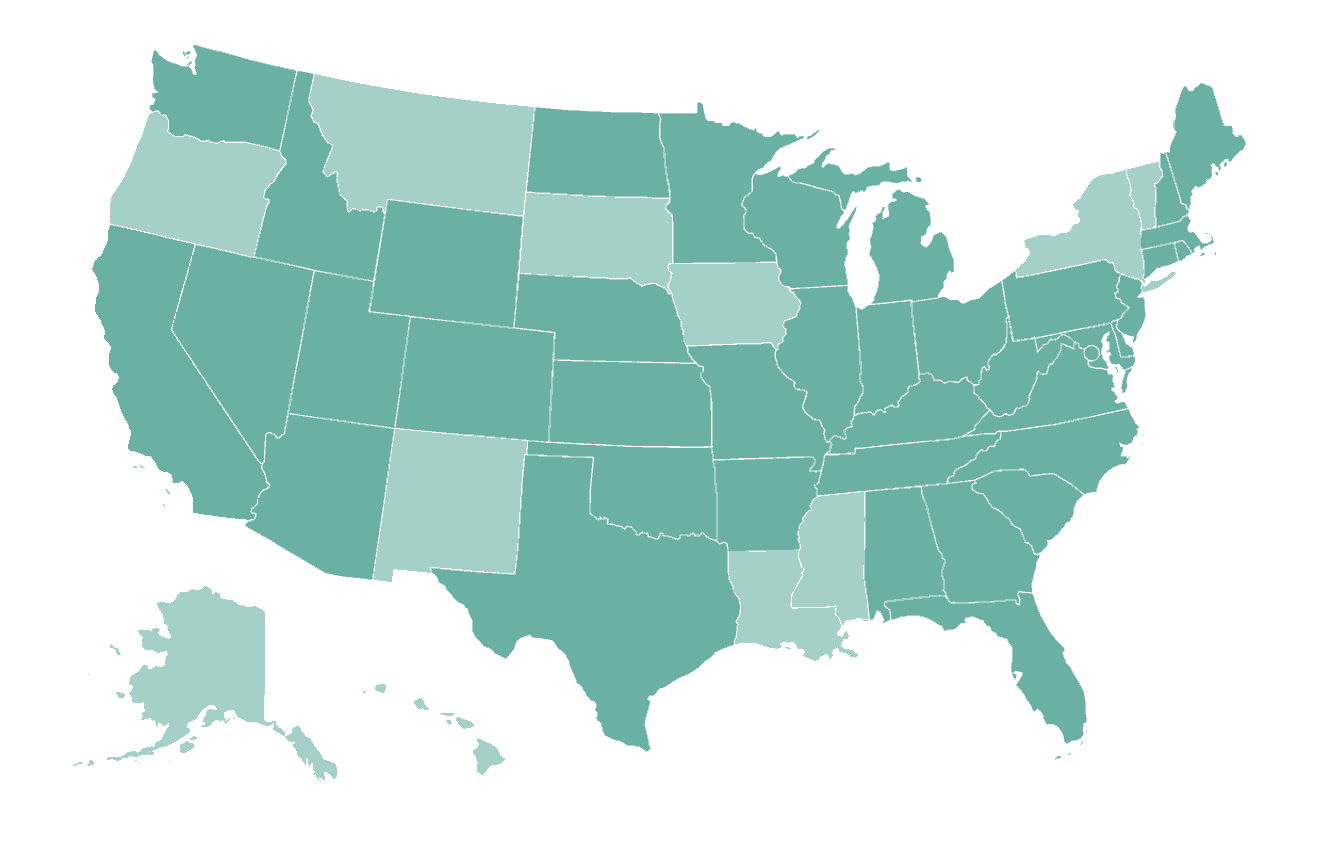
Yes. All of our work is online, and we see clients in California, Texas, Virginia, and 40+ other states. Dr. Annia Raja sees clients across all of those states, and Dr. Chaim Rochester sees clients in California, Texas, and Virginia.
Do you accept insurance?
No. Helm Psychology is a cash-pay practice. We can provide documentation for out-of-network reimbursement if your plan offers it, and our main FAQs page has more on how that works.
What does the first step look like?
A free 15-minute consult call. You describe what's been happening, we tell you honestly whether we're the right fit and which therapy format makes sense, and you can ask whatever you want about how we work. If we aren't the right practice for you, we'll say so and point you somewhere else.
How We Work With You in Therapy for Difficult Parents
Therapy for difficult parent relationships doesn't have to happen in one format. Sessions can happen in different time containers: a steady weekly rhythm, a monthly intensive cadence, or a focused intensive when something needs more room than a standard session can hold.
Weekly Therapy
This is how we work with most of our clients. Coming consistently, weekly at minimum or two to three times a week, gives us room to see the patterns as they happen, including the ones that show up in the therapy itself, and to stay with them long enough for real change to unfold.
Monthly Intensive Therapy
For clients who want depth and continuity but need longer sessions less often, or whose lives don't fit neatly into a weekly appointment. The work keeps its continuity, with more room in each meeting to settle in and follow complexity.
Focused Therapy Intensives
Concentrated time when something can't keep being managed around the edges: a decision, a transition, a stuck pattern, or something harder to name. They aren't a shortcut around depth; they're a larger container with more space than a standard session allows. More on our intensive therapy page.
Online Therapy for Adult Children of Difficult Parents in California, Texas, Virginia, and 40+ States
All of our work is online. If you've been looking for a therapist who understands narcissistic or emotionally immature parents anywhere in California, or in Texas, Virginia, or any of the 40+ PSYPACT states and DC, we can see you wherever you are; you don't need to be in Los Angeles, and most of our clients aren't. And there's something to be said for doing this work from a room of your own choosing, far from your parents' kitchen table.
Let’s Talk
If reaching out feels disloyal to your family, or like you're making too big a deal of something you've always handled on your own, you're welcome to tell us that on the first call. The first step is a free 15-minute conversation with an actual psychologist.
Helm Psychology isn't a crisis service. If you're in immediate danger or thinking about harming yourself, call or text 988 to reach the Suicide and Crisis Lifeline, or call 911.